Advancing Padel in India – From Grassroots to Elite Excellence
About Us
The Padel Sports Foundation (PSF) is a not-for-profit entity registered as a Section 8 company under the Companies Act, dedicated to the structured growth and promotion of Padel in India. The Foundation works across the full sporting pyramid — from grassroots participation to elite competition — with the objective of building a sustainable, inclusive, and professionally governed Padel ecosystem.
Through strategic partnerships, structured programming, and event execution, PSF plays a catalytic role in accelerating the development of Padel nationwide.
Our Vision
To create a structured, inclusive, and sustainable Padel ecosystem in India that nurtures participation at every level and enables Indian athletes to compete globally.
Together, we aim to build the future of padel in India.
Strategic Partnership
In collaboration with the Indian Padel Tour, the Foundation has supported and facilitated multiple tournaments and competitive platforms across India. These events have:
Expanded competitive opportunities for players
Established structured ranking pathways
Increased visibility for the sport
Attracted corporate and community engagement
This partnership has significantly contributed to formalizing the competitive landscape of Padel in India.
Our Focus Areas
Grassroots Development
Introduction programs in schools, colleges, and clubs
Talent identification initiatives
Training camps and development clinics
Competitive Pathway
Organized tournaments under the Indian Padel Tour
Structured ranking opportunities
Elite player exposure and support
Capacity Building
Coach and referee education programs
Technical advisory support
Institutional partnerships
Infrastructure & Access
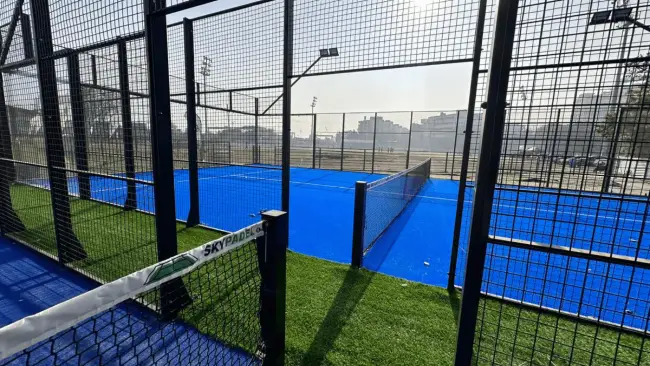
Encouraging development of new padel facilities
Supporting accessible and community-based play
History of Padel
Padel was invented in 1969 in Acapulco, Mexico, by Enrique Corcuera. Corcuera modified an enclosed squash-style court at his home, incorporating solid walls and a smaller playing area to adapt the game for limited space. He combined elements of tennis — such as scoring and net play — with the rebound dynamics of squash, creating a unique racquet sport that emphasized strategy, reflexes, and teamwork over sheer power.
The sport soon attracted attention among Corcuera’s social circle. In the early 1970s, Spanish businessman Alfonso de Hohenlohe-Langenburg was introduced to the game and recognized its commercial and sporting potential. He brought Padel to Spain, building the first courts at the Marbella Club. From there, the sport spread rapidly among Spanish clubs and sporting communities. Around the same time, Padel was introduced in Argentina, where it gained immense popularity and developed a strong competitive culture.
…
By the 1980s and 1990s, Spain and Argentina had established national federations, formal rules, and organized tournament circuits. The professionalization of the sport accelerated with structured tours, standardized regulations, and coaching systems. In 1991, the International Padel Federation (FIP) was established to regulate and promote the sport worldwide. The FIP oversees international competitions, including the World Padel Championships, and works to expand the sport across continents.
Today, Spain remains one of the global leaders in Padel in terms of participation, infrastructure, and professional competition, while Argentina continues to produce world-class players. From its origins as a recreational adaptation in Mexico, Padel has evolved into a globally recognized and professionally organized sport played in more than 90 countries, with a rapidly expanding international footprint.
The Growth of Padel
Padel is widely recognized as one of the fastest-growing sports in the world. Over the past decade, the number of courts and registered players has increased exponentially across Europe, Latin America, the Middle East, and parts of Asia. Countries such as Spain and Argentina have established strong professional circuits, while emerging markets in the Gulf region and Southeast Asia are witnessing rapid infrastructure expansion and private investment.
The sport’s accessibility is one of its strongest growth drivers. Padel is easy to learn for beginners yet strategically challenging at advanced levels, making it appealing across age groups and skill levels. Its doubles format encourages social interaction, which has made it particularly popular in club-based and community environments. Additionally, the compact court size allows facilities to be developed within urban spaces, residential complexes, clubs, and commercial sports hubs, increasing scalability and return on investment for developers.
…
Globally, Padel has also benefited from increased media visibility, professional tour structures, celebrity endorsements, and corporate sponsorships. The integration of ranking systems, structured tournaments, and certified coaching pathways has further professionalized the sport and strengthened its credibility as a competitive discipline.
India is currently in a high-growth phase. Court development is accelerating in metropolitan cities as well as tier-2 markets. Player participation is rising steadily, with increased interest from youth, recreational players, and former tennis and squash athletes transitioning to Padel. Organized tournament circuits and league formats are expanding, providing structured competition and enhancing visibility.
With strategic governance, sustained infrastructure investment, standardized coaching frameworks, and strong grassroots programming, India holds significant potential to become a major Padel hub in Asia. The combination of demographic advantage, urban sports culture, and growing private-sector interest positions the country to emerge as a competitive Padel nation in the coming years.